The Lever and the Letter (9th Literary)
A storm. A lighthouse. A single lever that decides a ship’s fate. This Grade 9 Reading Literature assessment uses “The Lever and the Letter” to push students past plot recall into theme, structure, and moral dilemma analysis. Across 11 multiple-choice questions, students tackle paradox, connotation, and point of view while citing strong evidence (RL.9.1) and tracking how Mara’s choices develop theme and character (RL.9.2–RL.9.3). The set is standards-aligned and DOK-rigorous, with an included answer key—ready to print, assign, or export.
The Lever and the Letter
by StandardSet Curriculum
The storm had teeth. That was how old Silas described it as he watched the barometer drop—a gale that would chew up the coast and spit out driftwood.
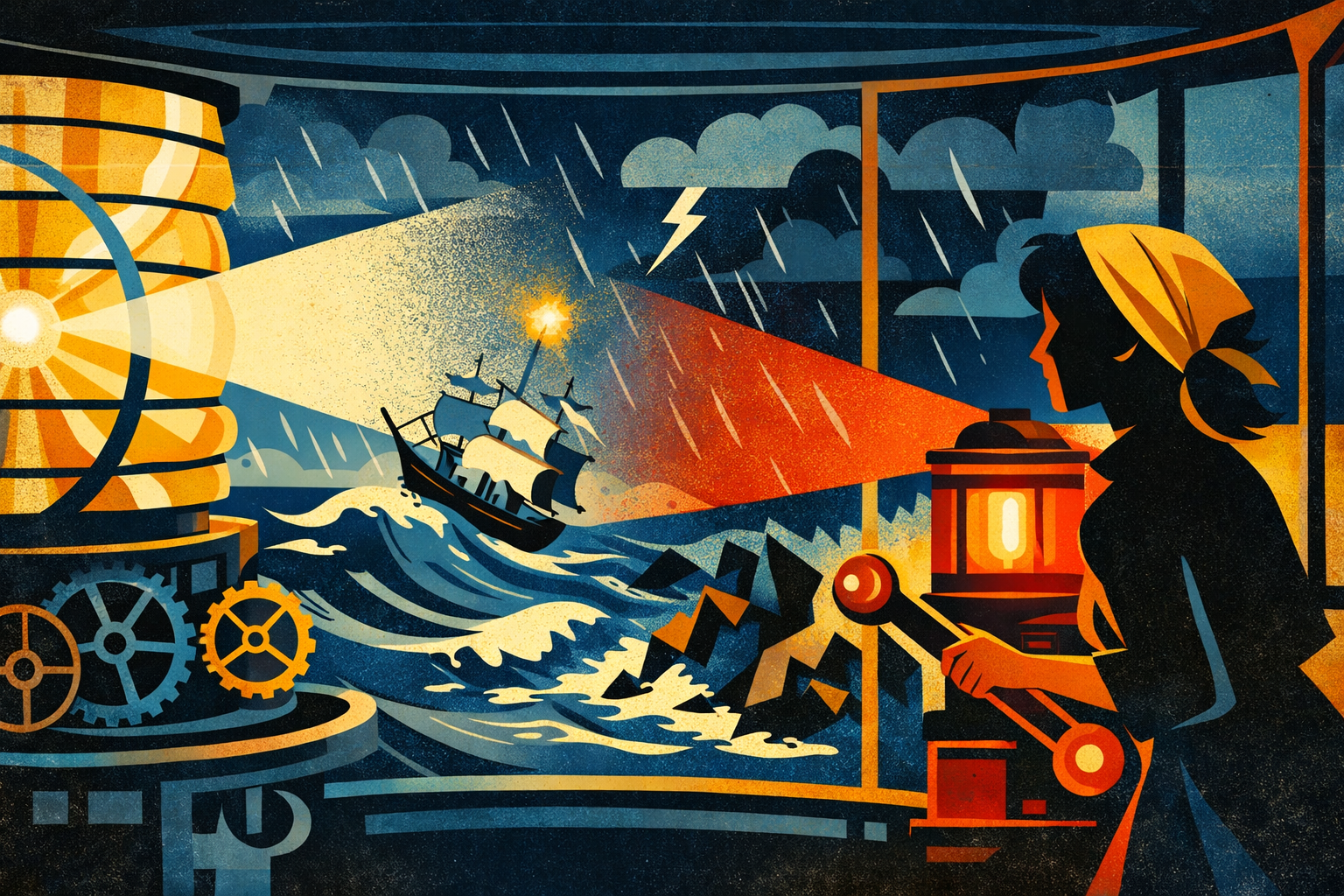
Mara stood in the lantern room of the Greystone Lighthouse, seventy feet above the churning Atlantic. The glass walls rattled in their iron frames, assaulted by rain that hit like buckshot. Below her, the ocean was a roiling black void, illuminated only by the rhythmic, blinding sweep of the Fresnel lens.
Flash. Darkness. Flash. Darkness.
Mara was not supposed to be on watch. That was her father’s duty. But Silas was downstairs, gripped by a fever that had burned through him for three days, leaving Mara as the sole guardian of the jagged coastline. She knew the machinery of the lighthouse as well as she knew her own heartbeat. She knew the gears, the oil feeds, and the heavy iron lever that controlled the fog signal.
But tonight, the machinery was the least of her burdens.
Three hours ago, a message had come through the semaphore line from the southern station: The Peregrine is driving north. Rudder damaged. Attempting to make the inlet.
The Peregrine was Kael’s ship.
Kael, who had left Greystone two years ago with a promise pressed into Mara’s palm—a promise to return with enough gold to buy a keel of his own and ask Silas for her hand. For two years, Mara had tended the light, watching the horizon, measuring her life in the rotation of the beam.
But sailors talk, and news travels faster than ships.
Six months ago, a letter had arrived from a cousin in Boston. It spoke of Kael, yes. But it also spoke of the merchant’s daughter who had taken a fancy to the handsome first mate. It spoke of dinners in high parlors, of a father who owned a fleet, and of a wedding planned for the spring. Mara had burned the letter. She had not burned the doubt.
Now, Kael was out there in the dark. The Peregrine was crippled, fighting a sea that wanted to swallow it whole.
Mara gripped the railing. She could see the faint, desperate flare of a ship’s rocket miles out. They were close. Too close to the Razor—a submerged ridge of granite that had claimed a dozen ships in Mara’s lifetime.
There were two channels into the safety of the inlet.
The South Channel was wide and deep, the only safe harbor in a storm this size. If the Peregrine took the South Channel, they would glide into calm waters. Kael would survive. He would step onto the dock, alive and whole. And then, Mara would know. She would see him step off the ship, perhaps with the merchant’s daughter on his arm, or perhaps alone but with his heart already given away. She would have to watch him live a life that didn't include her.
The North Channel was a lie. On a calm day, at high tide, a skilled pilot could thread a small sloop through it. But in a gale like this? It was a gauntlet of foam and stone. A ship the size of the Peregrine would be dashed to pieces within minutes. There would be no survivors.
If Kael took the North Channel, he would belong to the sea. He would never marry the merchant’s daughter. He would remain exactly as he was in Mara’s memory—young, loyal, and hers alone.
The lighthouse had a secondary signal—a red directional lantern used to guide ships when the main beam was obscured by fog.
If Mara swung the red lantern to the left, she signaled the South Channel. She gave him salvation, and she gave him to another woman. If Mara swung the red lantern to the right, she signaled the North Channel. She gave him to the storm, and she kept him forever.
Another rocket flared, closer this time. The ship was blind. They were waiting for her signal. They trusted the Keeper of Greystone to guide them. They didn't know the Keeper was a woman whose heart was a battleground between a two-year-old promise and a six-month-old doubt.
Mara looked at the red lantern. She thought of Kael’s face the day he left, the way the sun caught the salt in his hair. She loved him with a ferocity that frightened her.
Did she love him enough to let him go? Or did she love him too much to let him live?
The wind howled, a sound like a thousand voices screaming in judgment. Mara’s hand closed around the cold iron handle of the lantern mechanism. She could feel the vibration of the storm in the metal.
She didn't hesitate. She didn't tremble. She knew exactly which pain she could endure and which she could not.
She threw the lever.
Questions
Read this excerpt from paragraph 18:
"If Mara swung the red lantern to the left, she signaled the South Channel. She gave him salvation, and she gave him to another woman."
A student says, "Mara faces a paradox in this moment." Using the excerpt and the events in the story, what does the word paradox most nearly mean as it is used in this sentence?
a situation that seems self-contradictory because saving someone also means losing them in another way
a moment of complete peace because every possible choice leads to the very same safe result
a problem that is easy to solve because one clear, safe option is better than the rest
a promise that cannot be broken because it is based on deep and unchanging love and trust
Standard: L.9.4
How does the author’s use of paradox in the lines "Did she love him enough to let him go? Or did she love him too much to let him live?" refine the central idea of love and sacrifice in the passage?
It shows that Mara’s love forces her to choose between protecting Kael’s life and protecting her own heart, deepening the theme of painful sacrifice.
It shows that Mara’s love proves she should ignore the storm and wait, suggesting that true love removes the need for any sacrifice.
It shows that Mara’s love makes her certain Kael still loves her, shifting the theme from sacrifice to confidence in their relationship.
It shows that Mara’s love means the storm will spare Kael, turning the theme of sacrifice into a belief in fate and destiny instead.
Standard: L.9.5
Read this sentence from paragraph 19:
'They didn't know the Keeper was a woman whose heart was a battleground between a two-year-old promise and a six-month-old doubt.' (paragraph 19)
Based on the passage, what makes Mara's heart a 'battleground'?
She is torn between believing Kael’s promise to return and marry her and believing the letter that says he plans to wed someone else.
She is torn between wanting to rush to her feverish father downstairs and forcing herself to stay in the lantern room to keep the watch alone.
She is torn between her fear of the violent storm outside and her sense of duty to keep the light shining for passing ships.
She is torn between hating the deadly sea that threatens sailors’ lives and loving the rocky coast that has been her home since childhood.
Standard: RL.9.1
Which statement best expresses a central idea of the passage?
Mara’s power over the ship’s fate forces her to choose between her own desires and her duty to protect lives.
Mara’s years in the lighthouse have mainly taught her technical skills, allowing her to face any storm calmly and without fear.
Mara’s discovery about Kael’s rumored fiancée proves that people who leave home will always forget their promises and betray love.
Mara’s experience in the storm shows that the sea is far more dangerous than the frightening shipwreck tales she heard growing up.
Standard: RL.9.2
Read this sentence from paragraph 23:
"She didn't hesitate. She didn't tremble. She knew exactly which pain she could endure and which she could not."
Based on this description, how does Mara's response to the crisis with the Peregrine develop her character?
by showing that she acts out of sudden anger at Kael's possible betrayal, choosing quickly so she will not have to think about him again
by showing that she allows her fear of the storm to control her, choosing at random because she believes the ship is doomed no matter which channel it takes
by showing that she accepts the pain her choice will cause her and makes a deliberate decision, ending her earlier indecision about Kael and what will happen to the Peregrine
by showing that she forgets Kael and her own feelings completely, thinking only like a professional keeper who treats the Peregrine exactly the same as any other passing ship
Standard: RL.9.3
Read this sentence from paragraph 15:
"But in a gale like this? It was a gauntlet of foam and stone."
What is the meaning of the word "gauntlet" as it is used in this sentence?
a safe channel that leads ships into the harbor
a dangerous passage that is filled with many obstacles
a narrow inlet that can only hold small fishing boats
a deep stretch of water that stays calm during storms
Standard: RL.9.4
Which quotation from the passage best supports the inference that Mara understands her choice of signal will permanently shape both Kael’s fate and the course of her own life?
“She knew the machinery of the lighthouse as well as she knew her own heartbeat. She knew the gears, the oil feeds, and the heavy iron lever that controlled the fog signal.”
“If Mara swung the red lantern to the left, she signaled the South Channel. She gave him salvation, and she gave him to another woman. If Mara swung the red lantern to the right, she signaled the North Channel. She gave him to the storm, and she kept him forever.”
“Six months ago, a letter had arrived from a cousin in Boston. It spoke of Kael, yes. But it also spoke of the merchant’s daughter who had taken a fancy to the handsome first mate.”
“Another rocket flared, closer this time. The ship was blind. They were waiting for her signal. They trusted the Keeper of Greystone to guide them.”
Standard: RL.9.1
According to the passage, which detail explains why Mara is on lighthouse watch instead of Silas during the storm?
Silas is downstairs with a fever that leaves Mara as the only guardian of the coastline.
Silas describes the storm as one that would chew up the coast and spit out driftwood.
Silas is the person whose duty it normally is to keep watch in the lighthouse.
Silas is the man Kael plans to ask for Mara’s hand after earning enough gold.
Standard: RL.9.2
Based on Mara’s thoughts throughout the passage, what is the best explanation for why she throws the lever without hesitation at the end, and how does this decision most strongly contribute to the development of the story’s central theme?
She chooses the North Channel because her jealousy over Kael’s possible engagement overpowers her duty as Keeper, which develops the theme that powerful emotions can excuse betrayal in extreme situations.
She chooses the North Channel because she believes the storm will spare the Peregrine despite the danger, which develops the theme that faith in fate is stronger than human responsibility or reason.
She chooses the South Channel because she cannot endure the guilt of causing Kael’s death, even though she may lose him to another, which develops the theme that real love and duty require self‑sacrifice over possessive desire.
She chooses the South Channel because she wants to test whether Kael will keep his promise to her after the storm, which develops the theme that true loyalty can only be proven through life‑threatening trials.
Standard: RL.9.3
Read this sentence from paragraph 14:
"The South Channel was wide and deep, the only safe harbor in a storm this size."
How does the author's decision to pause the urgent description of the Peregrine's approach in paragraphs 12–13 and instead focus on Mara's thoughts about the two channels in paragraphs 14–16 most contribute to the tension of the scene?
by slowing the pacing and making readers wait to see which signal Mara will choose, which increases the suspense of her decision
by explaining the lighthouse channels so clearly that the danger feels solved, which lowers the suspense of the approaching storm
by shifting attention away from Mara’s fears and onto the setting, which makes the scene feel calmer and less intense
by revealing that Kael’s ship will safely reach the inlet, which removes the uncertainty about the outcome of the storm
Standard: RL.9.5
Question:
How do Mara's thoughts about the North Channel in paragraphs 15–16 show her point of view about Kael's future?
They show she views his possible death as a way to avoid seeing him with someone else, because she imagines that dying in the North Channel would keep him young, loyal, and hers in memory.
They show she is confident the storm will not harm him, because she remembers that some captains can pass the channel safely and assumes Kael’s ship will also make it through without serious damage.
They show she feels personally guilty for the danger he faces, because she believes that doubting his promise somehow caused the storm and that her thoughts have pushed the Peregrine toward the rocks.
They show she thinks her choices do not matter, because she convinces herself that the rocks and waves alone will decide Kael’s fate and that the lighthouse signal cannot change what will happen.
Standard: RL.9.6
Generated by StandardSet
standardset.app