Conversation Hearts (7th Informational)
A Valentine’s-Day-ready, Grade 7 informational text assessment that traces the surprising history of conversation hearts—from medicinal lozenges to NECCO Sweethearts and the 2019 “Great Heart Shortage.” Students practice key reading skills like vocabulary in context, central idea, author’s purpose, and how ideas develop across paragraphs. This 12-question multiple-choice assessment targets RI.7.1–6 and L.7.4–6 with clear DOK progression (including DOK 3 cause/effect reasoning). Includes a complete answer key and StandardSet-branded, print-and-assign formatting—plus fully editable export options when generated in StandardSet.
Conversation Hearts (7th/Informational)
by Unknown
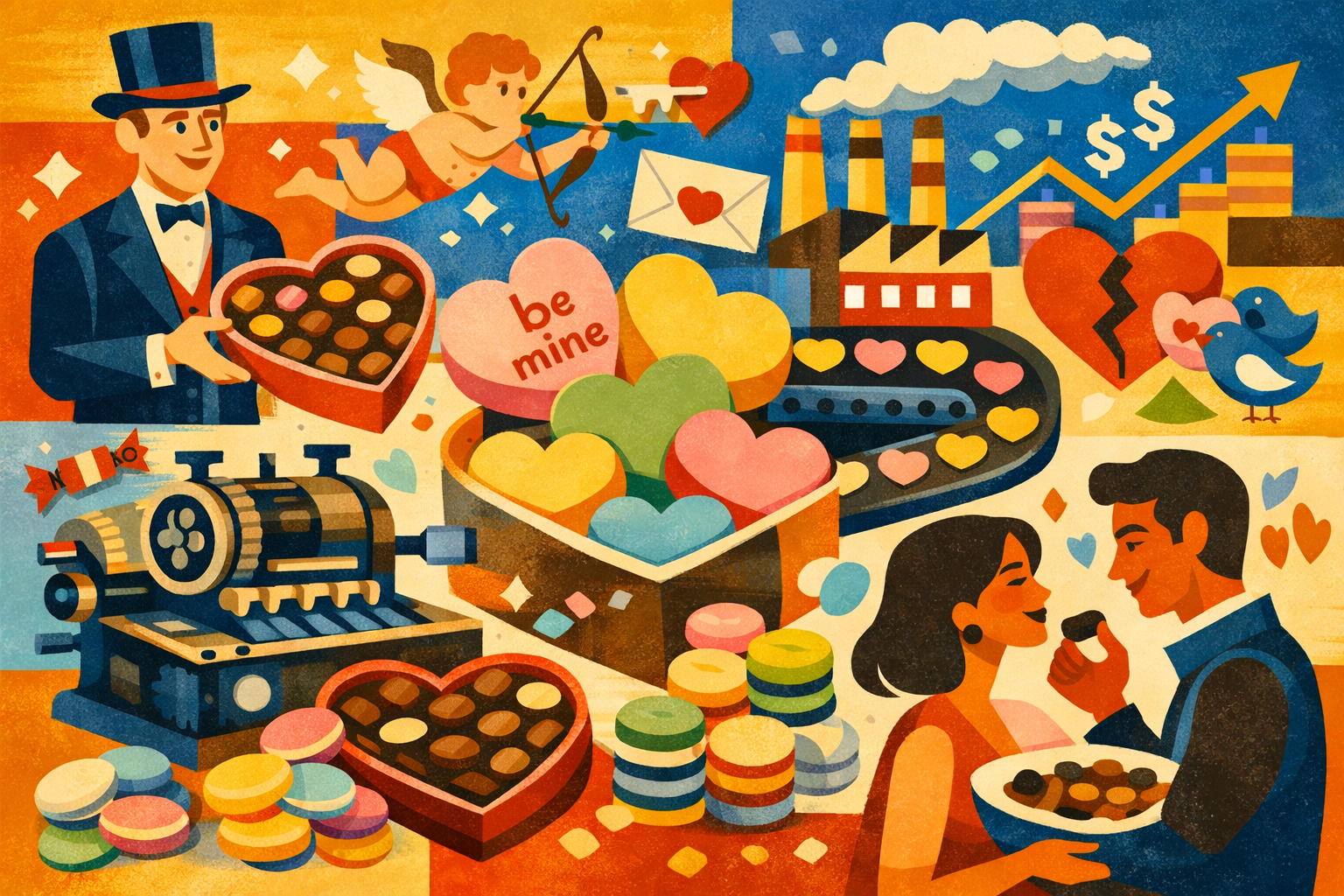
When February 14th approaches, store aisles across the United States undergo a seasonal metamorphosis. Shelves once stocked with winter goods are suddenly awash in shades of pink, red, and white. While flowers and jewelry are popular tokens of affection, nothing dominates Valentine's Day quite like candy. According to the National Retail Federation, shoppers spend billions of dollars on sweets for the holiday annually. Although chocolate remains the undisputed king of Valentine’s Day sales, a small, chalky sugar heart with a surprising history continues to hold its ground as a seasonal icon.
Chocolate has been associated with romance for centuries, yet its modern dominance is largely due to marketing genius rather than taste alone. In 1861, Richard Cadbury, a British chocolate manufacturer, created the first heart-shaped box for Valentine’s Day. He brilliantly marketed the boxes as dual-purpose: once the chocolates were eaten, the beautiful container could be used to store keepsakes like love letters. Today, the tradition endures, with over 36 million heart-shaped boxes sold each year. Whether filled with caramel, nuts, or fruit creams, these boxes remain the top-selling item for the holiday.
However, chocolate's most famous competitor has a strictly medicinal origin. In 1847, a Boston pharmacist named Oliver Chase invented a machine to simplify the production of medical lozenges. His "lozenge cutter," the first American candy machine, pressed a mixture of sugar and medicine into a dough and cut it into uniform discs. Chase soon realized that his machine could be used to create pure candy wafers, eventually launching the famous Necco Wafers.
The transition from simple wafers to "conversation hearts" was driven by Oliver’s brother, Daniel Chase. In 1866, Daniel developed a method to print words directly onto the candy using vegetable dye. Originally, these candies were not shaped like hearts at all; they were often cut into shapes like scallop shells or baseballs and were much larger than the modern version. Known as "cockles," these early treats featured lengthy, often old-fashioned messages such as, "How long shall I have to wait? Please be considerate."
It wasn't until 1902 that the candies were officially produced in the heart shape we recognize today. For over a century, the New England Confectionery Company (NECCO) manufactured these "Sweethearts." The process was incredibly slow and required immense foresight; the company had to begin manufacturing the hearts in late February just to have enough supply for the following Valentine's Day.
The phrases printed on the hearts serve as a linguistic time capsule of American culture. Over the decades, urgent requests like "Call Me" replaced outdated ones like "Fax Me," which had previously replaced "Telegraph Me." In recent years, however, the industry has seen shifts in ownership. When NECCO declared bankruptcy in 2018, the fate of the conversation heart hung in the balance. The Spangler Candy Company acquired the rights, but moving the massive, vintage equipment proved difficult. As a result, Valentine's Day 2019 suffered a "Great Heart Shortage," proving just how essential these small, powdery candies are to the holiday.
Today, while trends shift toward gourmet gummies and sour chews, the rivalry between the velvet heart box and the chalky conversation heart persists. Whether shoppers prefer the richness of cocoa or the nostalgic crunch of a sugar disc, the confectionery industry counts on February 14th to sustain its sweet success.
Questions
Read these sentences from paragraph 1:
"When February 14th approaches, store aisles across the United States undergo a seasonal metamorphosis. Shelves once stocked with winter goods are suddenly awash in shades of pink, red, and white."
Based on these sentences, what does the word "metamorphosis" most nearly mean as it is used in the paragraph?
a careful arrangement of products on the store shelves
a complete change in how the store aisles look
a cheerful celebration of Valentine’s Day inside the stores
a business plan to sell more candy during the holiday
Standard: RI.7.4
What did Richard Cadbury create in 1861 for Valentine’s Day?
The first heart-shaped box for Valentine’s Day
A new recipe for fancy Valentine’s Day chocolate
The largest candy factory in the United States
The original conversation hearts with printed love messages
Standard: RI.7.1
Read this sentence from paragraph 5:
"The process was incredibly slow and required immense foresight; the company had to begin manufacturing the hearts in late February just to have enough supply for the following Valentine's Day."
Based on how it is used in the sentence, what does the word "foresight" most nearly mean?
careful attention to what is happening now
clear understanding of what happened before
skill at finishing difficult work quickly
careful planning for what will happen later
Standard: L.7.6
What is this passage mostly about?
the history of Valentine’s Day candy
the reasons people spend less on Valentine’s Day candy
the steps workers follow to wrap Valentine’s Day candy
the different ways people celebrate Valentine’s Day with flowers
Standard: RI.7.2
Which detail from the passage best supports the idea that conversation hearts reflect changes in American communication over time?
The candies were first officially produced in the heart shape in 1902 and continued to be sold for many years.
The phrases on the candies changed from “Telegraph Me” to “Fax Me” and later to “Call Me.”
The early candies, called cockles, were much larger and cut into shapes such as scallop shells or baseballs.
The Spangler Candy Company had trouble moving the old machines, which caused a major conversation heart shortage in 2019.
Standard: RI.7.1
Which statement best expresses a central idea of the passage?
Valentine’s Day candy, especially heart-shaped chocolate boxes and conversation hearts, has a long history and still plays a major role in how people celebrate the holiday.
Modern candy companies struggle to keep up with the demand for Valentine sweets because the machines for making conversation hearts are old and hard to move.
Early messages on conversation candies were printed on large, shell-shaped pieces with long sayings, but today’s smaller hearts use only short, modern phrases instead.
Shoppers making Valentine choices often decide between buying traditional heart-shaped chocolate boxes or selecting newer treats like gourmet gummies and sour chews for their gifts.
Standard: RI.7.2
Read this sentence from paragraph 3:
"Chase soon realized that his machine could be used to create pure candy wafers, eventually launching the famous Necco Wafers."
How does Oliver Chase's invention of the "lozenge cutter" lead to the creation of Necco Wafers?
It led him to use the same machine to press plain sugar into discs, creating a new candy called Necco Wafers.
It led him to throw away his machine and design a completely different one to make Necco Wafers.
It led him to stop making lozenges and switch to selling only chocolate hearts for Valentine’s Day.
It led him to add medicine to Necco Wafers so they could be sold as a health treatment.
Standard: RI.7.3
How does paragraph 6 mainly contribute to the development of ideas in the article?
It shows how the messages and makers of conversation hearts have changed over time and faced problems, proving that this candy is still an important Valentine’s tradition.
It explains how heart-shaped chocolate boxes are designed and sold in stores, showing that chocolate remains the only Valentine’s candy with a long and successful history.
It describes the first invention of candy for Valentine’s Day, introducing the main topic and giving background before the writer discusses other kinds of holiday sweets.
It compares different modern Valentine’s candies, arguing that new treats like gummies and sour chews have completely replaced older favorites such as chocolate boxes and conversation hearts.
Standard: RI.7.5
Based on the passage, what is the author's main purpose for writing this article?
to show that chocolate has always been the only real symbol of Valentine’s Day
to explain how Valentine’s candies became traditions and why they still matter today
to convince readers that conversation hearts should replace chocolate on Valentine’s Day
to describe how candy companies prepare and advertise for Valentine’s Day each year
Standard: RI.7.6
Read this sentence from paragraph 6:
"As a result, Valentine's Day 2019 suffered a 'Great Heart Shortage,' proving just how essential these small, powdery candies are to the holiday."
A student wants to use the word critical to describe how important conversation hearts are in this context and writes this sentence:
"Because of the Great Heart Shortage, conversation hearts are a critical part of Valentine's Day for many people."
Here is a dictionary entry for critical:
critical [krit-i-kuhl] adjective
- expressing disapproval and saying what is wrong
- using careful judgment to examine something
- extremely important to the success of something
- having a very serious or dangerous result
The student infers that critical means "very important." Which definition from the entry best supports this inference?
Definition 3
Definition 1
Definition 2
Definition 4
Standard: L.7.4
Read this sentence from paragraph 7:
Whether shoppers prefer the richness of cocoa or the nostalgic crunch of a sugar disc, the confectionery industry counts on February 14th to sustain its sweet success.
In this sentence, what does the word "nostalgic" suggest about how some people feel about conversation hearts?
It suggests that some people think the candies are too old-fashioned to enjoy anymore.
It suggests that some people enjoy the candies mostly because of their hard, crunchy texture.
It suggests that some people buy the candies mainly because they are popular on Valentine’s Day.
It suggests that some people enjoy the candies because they bring back happy memories of the past.
Standard: L.7.5
Based on the passage, which statement best explains how different events and decisions worked together to make conversation hearts an important part of Valentine’s Day?
Oliver Chase’s lozenge-cutting machine turned medicine into candy wafers, and Daniel Chase’s printing method added messages that helped conversation hearts become a unique Valentine’s tradition.
The invention of the first American candy machine made candy cheaper, and NECCO’s slow production process made people more patient about waiting for conversation hearts each year.
NECCO’s choice to shape the candy like hearts in 1902 and Spangler’s later purchase of the company showed that businesses mainly focused on changing the look of Valentine’s candy.
The early ‘cockles’ candy with long messages and the later ‘Great Heart Shortage’ in 2019 proved that people preferred older styles of candy over newer chocolate boxes.
Standard: RI.7.3
Generated by StandardSet
standardset.app