The River’s Ancient Ambush - Grade 6 RI Assessment (DOK 2-3)
This Grade 6 informational text assessment pairs a vivid science passage about the alligator snapping turtle with 12 standards-aligned multiple-choice questions that go beyond basic recall. Students analyze how the author develops central ideas, explains the turtle’s deceptive hunting strategy, and shifts from survival traits to modern conservation challenges. Questions target RI.6.1–RI.6.5 and L.6.4–L.6.6 (including vocabulary-in-context like “deception,” “living fossil,” and “monitor,” plus structure and central idea). The PDF includes a complete answer key and clear StandardSet branding—ready to print or export for fast, rigorous instruction.
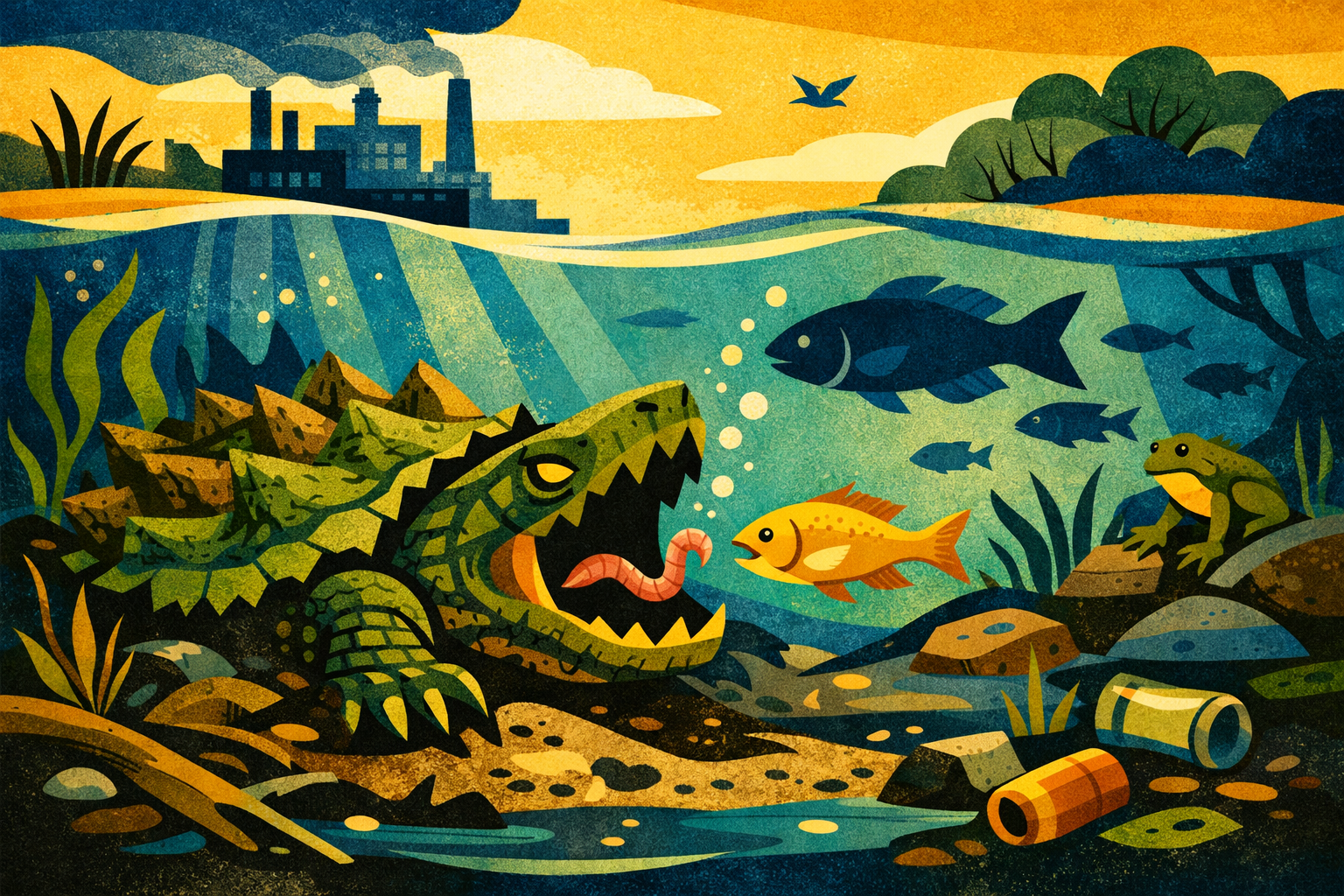
The River’s Ancient Ambush
by Unknown
Deep in the murky waters of southern rivers, a living fossil waits in the mud. The alligator snapping turtle is not a graceful swimmer. Instead, this massive reptile thrives by mastering the art of deception. With a jagged shell that resembles a rotting log and skin coated in green algae, the turtle blends perfectly into the dark, saturated bottom of the riverbed.
Unlike other predators that expend high amounts of energy chasing their next meal, the alligator snapping turtle prefers a surprisingly lazy strategy. It relies entirely on a built-in biological trap. The turtle settles into the mud, opens its powerful jaws, and remains completely motionless in the shadows. Inside its mouth rests a small, pink appendage attached to its lower tongue. When the turtle wiggles this fleshy lure, it looks exactly like a delicious, wriggling earthworm.
Unsuspecting fish spot the movement and swim directly into the open jaws, believing they have found an easy snack. The trap then snaps shut with terrifying speed and incredible force. This deceptive hunting method allows the turtle to conserve its energy while remaining completely concealed from both its prey and potential threats above the water.
Despite its fierce appearance and successful hunting strategy, this ancient creature faces serious modern challenges. Habitat destruction and severe water pollution have dramatically reduced their population in recent decades. Conservationists are now working to protect the murky environments where these fascinating reptiles live. Because these turtles grow very slowly and rely on highly specific river conditions, saving the alligator snapping turtle requires careful management of the entire waterway.
Questions
Based on the passage, why do conservationists focus on managing the entire waterway to help the alligator snapping turtle?
Because the turtles are fierce predators that could harm people if not closely watched.
Because the turtles need large areas of muddy water so they can hide easily from their prey.
Because the turtles grow slowly and depend on special river conditions that must be kept safe.
Because the turtles chase fish over long distances and use every part of the river when hunting.
Standard: RI.6.1
Which sentence best states the central idea of the passage?
The passage explains how the alligator snapping turtle's unique hunting trick helps it survive, but also shows that this ancient species is now in danger and needs protection.
The passage describes how the alligator snapping turtle looks and moves at the bottom of rivers, explaining how its shell and skin help it blend in with the riverbed.
The passage tells how the alligator snapping turtle traps fish by using a tongue lure and powerful jaws, describing how it waits in the mud instead of chasing its food.
The passage focuses on how pollution and habitat loss are harming river animals, giving examples of how dirty water can affect turtles and fish.
Standard: RI.6.2
What best explains how the author develops the idea that the alligator snapping turtle uses deception to catch its prey?
By describing how the turtle’s jagged shell and green algae help it hide on the river floor
By explaining how the turtle faces dangers from habitat loss, pollution, and changing waterways
By showing how the turtle hides in the mud, wiggles its tongue like a worm, and snaps its jaws on nearby fish
By telling how the turtle is a living fossil that grows slowly and needs very specific river conditions
Standard: RI.6.3
Read this sentence from paragraph 1:
'Instead, this massive reptile thrives by mastering the art of deception.'
Based on this sentence and the passage, what does the word deception most nearly mean as it is used in the sentence?
using quick speed to catch prey
using deep water to stay safe
using tricks to catch other animals
using color changes to hide better
Standard: RI.6.4
Read this sentence from paragraph 4:
'Despite its fierce appearance and successful hunting strategy, this ancient creature faces serious modern challenges.' (paragraph 4)
How does this sentence help structure the passage?
It repeats earlier details about how the turtle hunts so readers will remember them.
It shifts the focus from explaining the turtle's hunting method to describing the dangers it now faces.
It introduces a new description of the river habitat so readers can picture where it lives.
It ends the passage by giving the author's opinion that the turtle is very dangerous.
Standard: RI.6.5
Read the dictionary entry and the sentence below.
Dictionary entry for monitor (noun):
- a screen that shows pictures or information from a computer or camera
- a person whose job is to watch or check that something is done correctly
- a device that is used to carefully measure or track something over time
A scientist is studying the polluted river described in paragraph 4. She writes this sentence:
The scientist set up a monitor to measure how much pollution was in the water each day.
Based on the dictionary entry, which definition of monitor matches the way it is used in the sentence?
Definition 1, a screen that shows pictures or information
Definition 3, a device that is used to measure or track something
Definition 2, a person whose job is to watch or check something
None of these three definitions from the entry
Standard: L.6.4
Read this sentence from paragraph 1:
"Deep in the murky waters of southern rivers, a living fossil waits in the mud."
What does the phrase "a living fossil" help the reader understand about the alligator snapping turtle?
It has existed for a very long time and looks like an ancient animal.
It is delicate like a fossil and can easily break if it is touched.
It uses a lot of energy and chases fish quickly through the river.
It will sink into the mud and eventually turn into a real fossil.
Standard: L.6.5
Which conclusion about the alligator snapping turtle is best supported by information in the passage?
Its ability to blend into the river bottom means it can live and hunt successfully in almost any kind of water, even if the river is clear, shallow, or heavily changed by people.
Its powerful jaws and fierce appearance keep it safe from danger, so even serious pollution and habitat loss do not threaten it as much as they might threaten other water animals.
Its habit of waiting in one place for food and its slow growth rate show that it is poorly adapted to catching prey and will probably disappear as rivers become more modern and busy.
It stays hidden to catch prey with little effort, but its slow growth and need for very specific river conditions make it easily harmed when its murky habitat is changed or polluted.
Standard: RI.6.1
How does the author develop the idea that the alligator snapping turtle’s survival depends on its river environment across the passage?
by describing its jagged shell, explaining its powerful bite, and showing how it surprises fish in the water
by showing how it looks like a rotting log, telling how it fools fish with its tongue, and comparing it to other predators
by explaining that it is a living fossil, describing its slow growth, and warning that pollution has hurt many river animals
by showing how it blends into the muddy river bottom, explaining that it hides from both prey and threats in the water, and stating that changes to its habitat and water quality now put the turtles at risk
Standard: RI.6.3
Which pair of paragraphs best helps the reader understand the central idea that the alligator snapping turtle’s unusual hunting method helps it survive, but that changes to its river habitat now threaten its survival?
Paragraphs 1 and 2, because they describe how the turtle looks and introduce its hunting method in the river mud.
Paragraphs 1 and 3, because they explain how its jagged shell hides it and how its trap closes on fish.
Paragraphs 3 and 4, because they show how its hunting method helps it catch prey and how modern problems now endanger it.
Paragraphs 2 and 4, because they tell how the turtle sets its trap and how people are trying to protect its rivers.
Standard: RI.6.2
Knowing that the root "bio" means "life," which detail from the passage best justifies the meaning of the phrase "biological trap" as it is used in paragraph 2?
With a jagged shell that resembles a rotting log and skin coated in green algae, the turtle blends perfectly into the dark, saturated bottom of the riverbed.
Inside its mouth rests a small, pink appendage attached to its lower tongue.
Unsuspecting fish spot the movement and swim directly into the open jaws, believing they have found an easy snack.
Habitat destruction and severe water pollution have dramatically reduced their population in recent decades.
Standard: L.6.4
Generated by StandardSet
standardset.app